
What to Know Before Buying Folly Beach Investment Property
May 28, 2026
May 28, 2026
Dreaming about a beach investment near Charleston? Folly Beach can be exciting, but it is not a market where you want to guess your way through the numbers or the rules. If you are thinking about buying an investment property near Folly Beach, you need to understand pricing, rental seasonality, licensing, taxes, and nearby alternatives before you make an offer. Let’s dive in.
Folly Beach benefits from the larger Charleston tourism engine. Greater Charleston recorded 7.89 million visitors and $14.03 billion in economic impact in 2024, with lodging sales reaching $1.55 billion. That matters because Folly fits many of the region’s strongest visitor draws, including beaches and waterfront access, restaurants, events, shopping, and outdoor recreation.
For you as a buyer, that creates a clear demand story. Travelers are not just coming for one narrow reason. They are often looking for a coastal stay tied to beach time, weekend trips, weddings, fishing, surfing, and seasonal getaways.
Folly Beach tends to follow a leisure-driven, seasonal pattern rather than a steady year-round business travel model. Official visitor content points to strong spring and summer activity, plus useful shoulder-season demand in spring and fall. Winter is smaller, but it still has some draw through fishing and off-season beach trips.
That means your income may not be evenly spread across the year. In many cases, summer can do a lot of the heavy lifting, while spring and fall help smooth out the calendar. Winter may still produce bookings, but you should underwrite conservatively rather than assume peak-level performance every month.
Seasonality on the coast also includes weather exposure. Atlantic hurricane season runs from June 1 through November 30, and Charleston climate patterns include hot summers and mild winters. For an investor, that means planning for possible storm-related downtime, insurance sensitivity, and some off-season vacancy even in a healthy annual market.
One of the biggest realities in this search is price. Current snapshots place Folly Beach at about a $1.2 million median listing price, compared with roughly $825,000 on Johns Island and about $639,500 on James Island. That difference can change your investment strategy quickly.
In practical terms, Folly Beach is often a more lifestyle-premium and capital-intensive buy. You may be paying more for proximity to the beach and the rental appeal that comes with it. Nearby island options can offer a lower entry point that may be easier to model for cash flow.
If you remember one thing from this article, make it this: on and around Folly Beach, regulatory eligibility can be just as important as purchase price. A home that looks perfect on paper may not support the rental plan you had in mind.
Folly Beach distinguishes among several rental categories:
The city also requires annual renewal, says licenses are not transferable, and requires at least 28 rented days per year to keep a license active. So if you are buying with short-term rental goals, you should never assume the seller’s setup automatically continues after closing.
This is where many buyers get tripped up. Folly Beach has stated that no new investor licenses are projected for the next business license year, and the city uses a waitlist process for any available licenses. In other words, buying a property on Folly Beach does not automatically create a new short-term rental right.
That makes pre-offer due diligence essential. If your numbers only work as a nightly rental, you need to verify the exact status of the property and what can legally continue after the sale.
On Folly Beach, property tax treatment also affects your strategy. The city notes that owner-occupied short-term rental properties are tied to the 4% property tax rate, while investor short-term rental properties are tied to the 6% rate. It also notes that, under state law, owner-occupied properties rented more than 72 days in a calendar year may lose eligibility for the 4% rate.
That difference matters because your annual carrying costs may look very different depending on how the property is classified. If you plan to use the home personally and rent it part-time, you need a very clear understanding of where your use pattern places you.
For stays under 90 consecutive days, South Carolina accommodations tax rules apply. The state says these stays are subject to a 5% sales tax, a 2% accommodations tax, and applicable local sales and use tax. Charleston County also states that Folly Beach properties are subject to the city or town fee rate plus the county’s 2% fee.
You do not need to memorize every tax line item before you start touring homes. But you do need to know that short-term rental income on the coast comes with added tax complexity that should be modeled early.
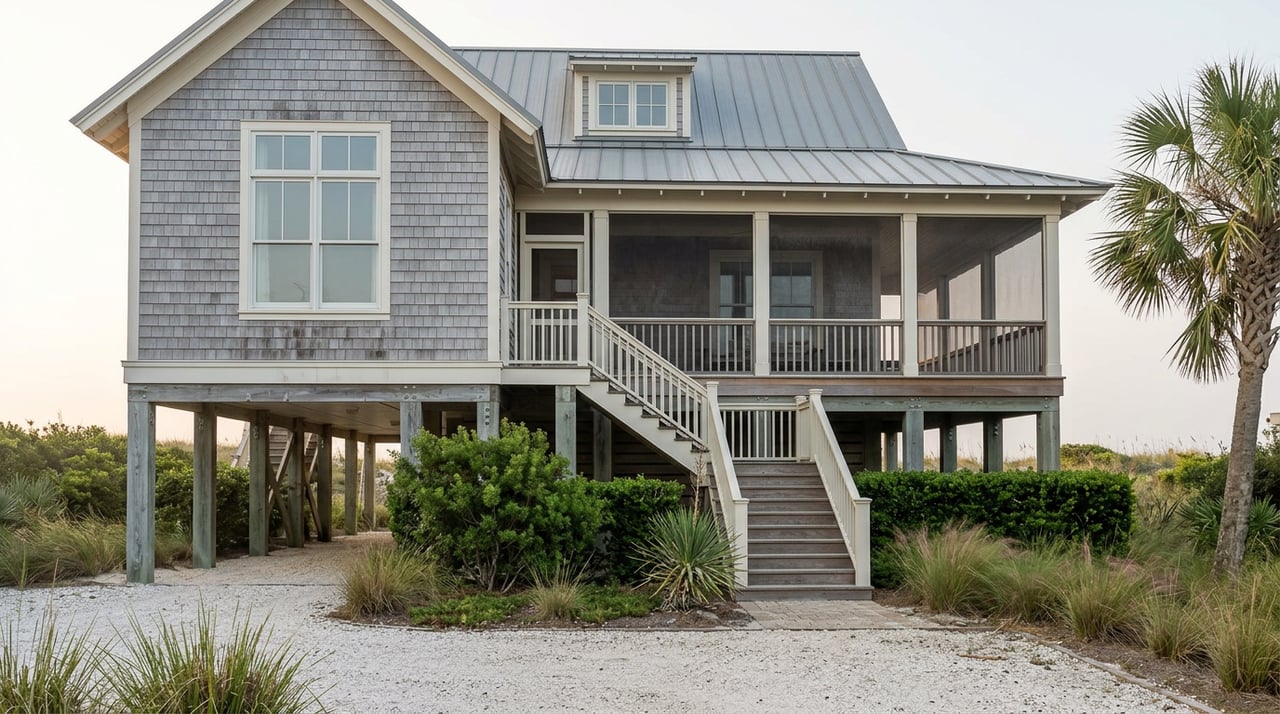
Detached homes close to the beach often have the strongest short-term rental appeal in this submarket. They fit the most common visitor patterns, including family trips, wedding stays, surf weekends, and recreation-focused travel. That can make them especially attractive if your goal is to compete in the classic beach-rental lane.
The tradeoff is that these homes often come with the highest purchase prices and the most operational sensitivity. Parking, septic limits, and license rules can all affect performance and compliance.
Condos and townhomes can reduce both upfront cost and maintenance compared with detached homes. That said, they require extra review. HOA restrictions, parking limitations, and local permit rules can all change whether the property truly fits your rental plan.
A lower price does not always mean a better investment. If the governing documents or local rules limit the rental use you need, the deal may stop making sense very quickly.
If Folly Beach pricing or licensing feels too tight, James Island and Johns Island may deserve a closer look. These nearby markets usually offer lower entry prices, and in some cases they may support different rental strategies more comfortably.
For example, the Town of James Island says month-to-month rentals are allowed, and non-owner-occupied homes must be rented for a minimum of 30 days at a time. That makes James Island more naturally aligned with a mid-term or long-term strategy unless the property qualifies under owner-occupied rules.
On Johns Island and James Island, the exact parcel location matters a lot. If a property is inside the City of Charleston, Category 3 rules apply off-peninsula, including these areas. The city limits a property to one short-term rental unit and requires one additional off-street parking space beyond the normal dwelling requirement, along with both a business license and a short-term rental permit.
If the property is instead in unincorporated Charleston County, county zoning rules apply. The county requires annual permit renewal, a business license before advertising or offering the unit, permit and business license numbers in ads, parking details, and a restrictive-covenants affidavit.
Zoning is only part of the picture. Restrictive covenants can also block your rental plan, even when the parcel appears to fit local rules. Charleston County’s short-term rental application packet requires an affidavit confirming that no recorded covenant prohibits the use.
This is especially important for condos, townhomes, and planned communities. Before you move forward, you should confirm whether any HOA or recorded covenant limits short-term, mid-term, or long-term rentals.
If you are comparing Folly Beach to nearby options, keep your process simple and disciplined. In this market, clear due diligence protects you more than optimism does.
Before you buy, verify:
If your goal is a classic beach short-term rental, Folly Beach can be compelling, but it is rarely a simple plug-and-play investment market. The combination of premium pricing, limited license availability, layered taxes, and seasonal demand means you need to buy very selectively.
If your goal is lower entry cost or more flexible use, nearby James Island or Johns Island may offer better alignment, especially for a mid-term or hybrid strategy. The right answer depends on whether you are prioritizing personal enjoyment, strong beach appeal, lower acquisition cost, or cleaner regulatory fit.
A thoughtful local search can save you from chasing the wrong property type in the wrong jurisdiction. If you want help sorting through Folly Beach opportunities, nearby island alternatives, and the rules that can affect your return, Marie Pohlman can help you evaluate the options with a clear, step-by-step approach.


If you're wanting a Real Estate Agent with exceptional communication, unwavering patience, extensive knowledge of the Lowcountry's market, and one that produces results, please don't hesitate to reach out!