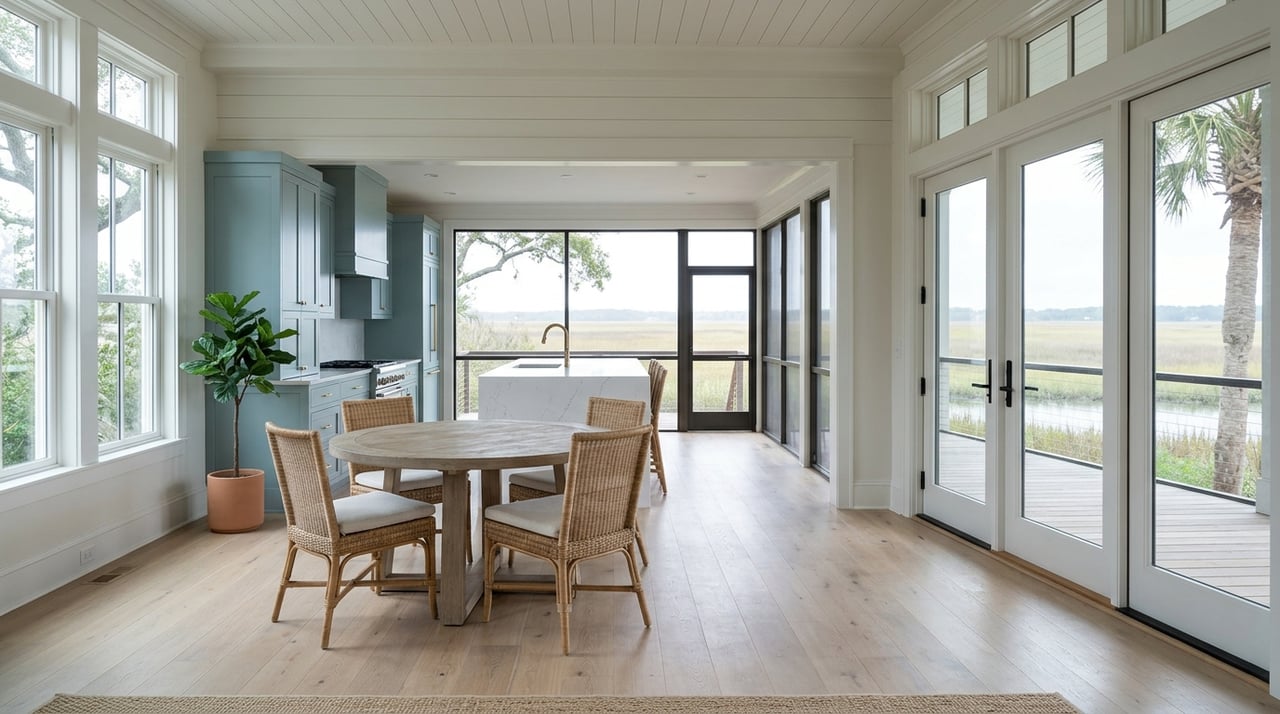
Kiawah and Seabrook Home Buying Tips for Smart Buyers
July 16, 2026
July 16, 2026
If you are thinking about buying on Kiawah or Seabrook, you are not just choosing a home. You are choosing a private-island ownership model, a set of rules, and a day-to-day lifestyle that works very differently from many other Charleston-area beach communities. The good news is that once you understand how these communities are structured, you can buy with much more clarity and confidence. Let’s dive in.
Kiawah Island and Seabrook Island are both private barrier-island communities near Charleston, but they are organized in slightly different ways. That matters because your ownership experience will include more than the home itself.
On Kiawah, every owner belongs to KICA, the Kiawah Island Community Association. KICA handles core community functions like beach access, roads, security, trails, boat landings, and the Sandcastle amenity center.
On Seabrook, every owner becomes a member of SIPOA, the Seabrook Island Property Owners Association. SIPOA describes Seabrook as a 2,400-acre private community with about 2,600 residential properties and 3.6 miles of private beach.
In practical terms, both communities operate more like controlled, rule-driven environments than a typical subdivision. Entry is managed, guest access is organized, and many parts of ownership are shaped by association rules and community systems.
One of the first differences you will notice is how access works. These islands are designed around controlled entry for owners, guests, and service providers.
On Kiawah, gate access is managed through RFID decals for owner vehicles and QR-code guest passes. Amenity access for places like the Sandcastle also uses a separate amenity-card system.
On Seabrook, owners receive gate-access barcodes, and guests are handled through island gate-access rules. Amenities such as the Lake House use an amenity-pass system.
If you expect to host family, friends, or renters, this matters. You will want to understand how guest entry works before you buy so your ownership style matches the community’s process.
Private-island ownership usually comes with layered costs. Before you fall in love with a property, it helps to map out the recurring expenses.
KICA’s 2026 annual assessment is $3,158 for improved property and $1,579 for unimproved property. If the property is behind the Vanderhorst gate, there is an additional 2026 segment assessment of $103 for improved property and $51.50 for unimproved property.
Kiawah also collects a 0.5% Contribution to Reserve fee on property sales, along with a $100 property sale administration fee. Depending on the property location, there may also be regime or segment fees.
SIPOA’s 2026 annual assessment is $3,133 for developed property and $1,723 for undeveloped property. At closing, SIPOA also charges a $250 administrative fee and a contribution to capital fee equal to one-half of 1% of the purchase price.
On Seabrook, some properties are also part of regime-managed communities. Those regimes can add their own assessments, maintenance obligations, and covenant rules.
When you budget, look beyond the mortgage payment. Total housing cost can include principal and interest, property taxes, homeowners insurance, flood insurance if applicable, association fees, club dues, and any regime fees.
In South Carolina, a primary residence is generally assessed at 4%, while a second home or vacation home is generally assessed at 6%. For many Kiawah and Seabrook buyers, that tax distinction can have a meaningful impact on long-term carrying costs.
This is one of the biggest distinctions between the two communities. While both offer strong amenity lifestyles, the structure is not the same.
Kiawah Island Club is a separate private club with Golf, Sports, and Social memberships. Membership is only available with a previously unsold Kiawah Island Real Estate homesite or a resale property from a current member who includes the membership in the sale.
The club’s amenities include Cassique, River Course, The Beach Club, The Cape Club, Sasanqua Spa, The Sports Pavilion, Marsh House, Two Meeting Street Inn, dining, and member programming. Kiawah also offers the optional resort-based Governor’s Club to property owners.
That means club access on Kiawah is more flexible and more property-specific. Some buyers want a qualifying club property, while others may be comfortable relying mainly on KICA access and selected resort-oriented amenities.
Seabrook Island Club is more directly tied to ownership. Under SIPOA covenants, all new property owners must buy a Club Membership.
The club offers Golf, Racquet Sports, Neighborhood, and Homesite memberships. Amenities include two golf courses, the Racquet Club, the Equestrian Center, the Lake House fitness and wellness center, the Beach Club, and dining.
For many buyers, that creates a simpler starting point because the club is part of the ownership conversation from day one. It also means you should review the membership category and current charges carefully during due diligence, since the club states that membership charges can change over time.
Both islands offer a range of ownership options, but the right fit depends on how you plan to use the property. Your lifestyle matters as much as square footage.
On Kiawah, options include single-family homes, villas, cottages, and homesites. Neighborhood patterns vary, too. Vanderhorst is limited to single-family homes and sits behind a second gate, while Ocean Park is known for large homesites and marsh or ocean views, and East Beach is close to island activity near the Sanctuary, tennis, and park amenities.
On Seabrook, official real estate materials describe homes, villas, cottages, townhomes, and homesites. SIPOA also notes that the island includes many regime-managed communities, which can affect maintenance responsibilities and fees.
In general, single-family homes often offer more privacy and flexibility. Villas, cottages, and townhome-style options can appeal to buyers who want a lower-maintenance ownership experience. Homesites may be attractive if you want to build over time rather than buy something turnkey now.
Financing for a second home can look different from financing for a primary residence. That is especially true in private coastal communities where property use and rental structure can matter.
Freddie Mac’s second-home rules require the loan to be secured by a one-unit property that the borrower occupies for some portion of the year. The property also cannot be tied to a mandatory rental pool, management control of occupancy, or revenue-sharing arrangement.
For that reason, buyers in Kiawah and Seabrook often benefit from working with lenders who are familiar with second homes, resort-area properties, and condo lending. Early lending conversations can help you avoid surprises once you narrow in on a property type.
Insurance also deserves close attention. If a home is in a FEMA Special Flood Hazard Area, flood insurance is generally required when there is a mortgage, and that coverage is separate from standard homeowners insurance.
If you plan to renovate, update landscaping, or build, you need to understand approval requirements before you close. These communities have formal review layers that can affect both timeline and cost.
On Kiawah, no structure or major exterior or landscaping change can move forward without Architectural Review Board approval. KICA also requires encroachment permits in certain situations.
On Seabrook, ARC approval is required for new construction, additions, major remodels, exterior alterations, and work such as painting, re-roofing, and tree trimming or removal. If your goal is to personalize a property quickly, these approval processes should be part of your planning from the start.
If you may rent the property, even occasionally, ask detailed questions early. Rental logistics are part of the ownership experience on both islands.
On Kiawah, renters and resort guests use the gate-access system. On Seabrook, rental-property registration is required, and short-term rentals also require a Town of Seabrook Island business license.
These are not details to leave for after closing. If your purchase depends on part-time rental use, your due diligence should include the island rules, any regime rules, and the local requirements that apply to that specific property.
Kiawah and Seabrook feel different from nearby public-beach communities because access is more controlled. That can be a major draw for buyers who value a more private, structured environment.
For context, Sullivan’s Island has 3.5 miles of beachfront, public beach access paths, and public parking in the right of way. Isle of Palms marks public access points, maintains more than 50 beach access paths, and includes county beach parks with public parking.
Kiawah’s Beachwalker Park is the island’s only public beach access, with 150 parking spots. Seabrook is more restrictive still, with access managed for property owners, club members, and guests.
If you are deciding between Charleston-area beach communities, this is one of the clearest lifestyle differences. Kiawah and Seabrook tend to feel more private and club-centered than the surrounding public-beach market.
Before you make an offer, try to confirm these points:
A clear checklist can save you time and help you compare properties more accurately. On islands like these, the details around ownership often matter just as much as the views.
If you want help sorting through the difference between Kiawah and Seabrook, property type tradeoffs, or the real carrying costs of ownership, working with a local advisor can make the process much more straightforward. Marie Pohlman offers a clear, step-by-step approach for Lowcountry buyers who want confident guidance in Charleston’s coastal markets.

If you're wanting a Real Estate Agent with exceptional communication, unwavering patience, extensive knowledge of the Lowcountry's market, and one that produces results, please don't hesitate to reach out!