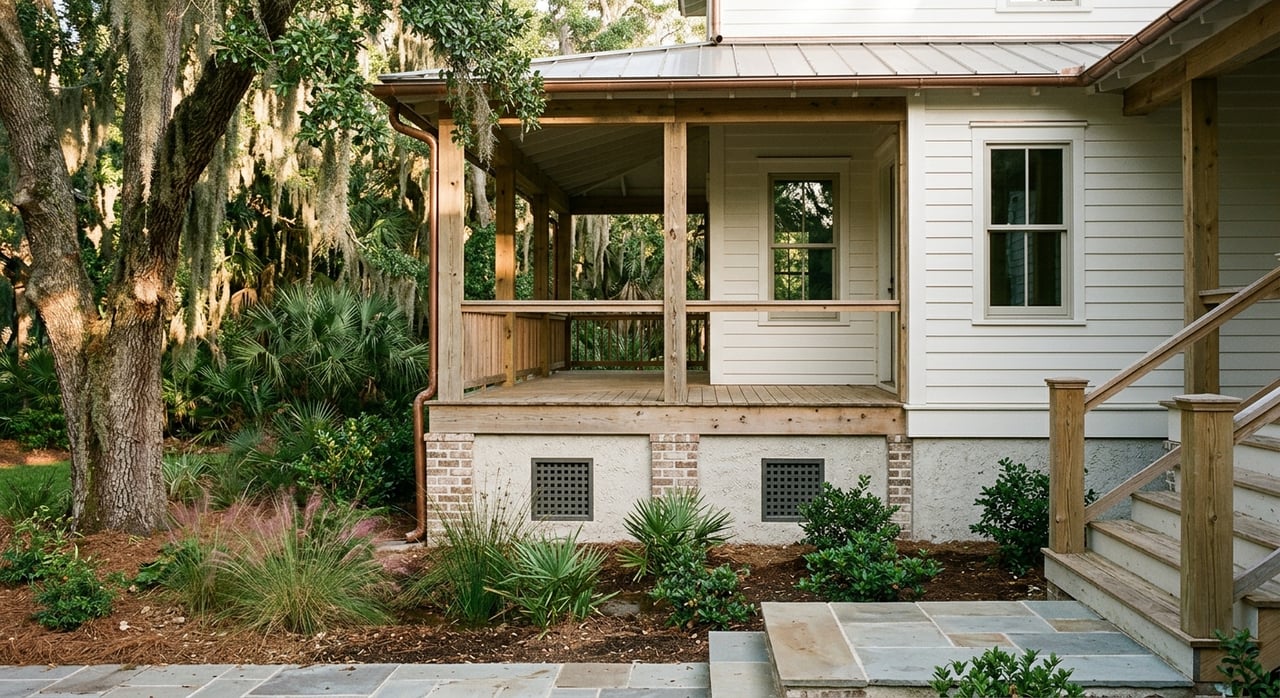
Your Guide to Johns Island New Construction Homes & Land
April 2, 2026
April 2, 2026
Thinking about buying land or building a new home on Johns Island? It can be an exciting path, but it is rarely as simple as choosing a floor plan and signing a contract. On Johns Island, planned communities, rural parcels, wetlands, flood zones, utility access, and county regulations can all shape what is possible and how much it may cost. If you understand those moving parts early, you can make smarter decisions and avoid expensive surprises. Let’s dive in.
Johns Island does not operate like a typical suburban new-construction market where every lot follows the same formula. Parts of the island fall within different growth and planning contexts, and Charleston County notes that the Main Road corridor includes everything from rural and agricultural residential uses to more intensive commercial and industrial development.
That mix matters when you start comparing properties. One lot may be in a more structured development setting, while another may require you to evaluate trees, drainage, wetlands, utility access, and building feasibility from the ground up. Charleston County also makes clear that its zoning ordinances apply to unincorporated property, so one of the first steps is confirming whether a parcel is in county jurisdiction or inside a municipality through the county’s zoning and planning resources.
Johns Island is also shaped by conservation. The Charleston County Greenbelt Program has preserved nearly 28,000 acres countywide, which helps explain why development pressure and land protection are both major parts of the local real estate story.
When you buy on Johns Island, you are often choosing between two very different paths. You may buy in a developer-led community, or you may purchase a standalone lot or larger tract for a custom or semi-custom build.
In a planned community, many major decisions are already made for you. The developer typically handles the subdivision layout, infrastructure, common areas, and some site-related constraints before homes are built.
Charleston County’s Orange Hill project is a good example of how structured that process can be. The planned development spans 933.097 acres, includes 304.80 acres of freshwater wetlands, allows up to 120 single-family detached homes, and includes internal wastewater infrastructure.
For you as a buyer, that can mean more predictability. It may also mean less flexibility, since the community design, lot use, and development timeline are often controlled by the project approvals and governing documents.
A custom parcel can offer more freedom, but it also places more responsibility on you. Instead of stepping into a pre-planned system, you may need to verify whether the land can support septic, how drainage works, whether public utilities are available, and what restrictions affect the buildable area.
If you are looking at a larger tract or thinking about future subdivision, the rules can become more technical. South Carolina states that in a subdivision with 10 or more lots, the Department will not perform the soil evaluation or prepare the system layout, so that work must be handled by a qualified professional under the state’s residential subdivision septic guidance.
Before you fall in love with a parcel, confirm exactly where it sits from a regulatory standpoint. Charleston County advises property owners to use GIS and zoning resources to identify whether a parcel is unincorporated and which zoning district applies.
This matters because zoning is not only about home use. According to the county, a zoning permit may be required for activities such as grading, filling, clearing, tree removal, earth disturbance, and construction. On Johns Island, overlay districts and development agreements can add another layer of rules affecting density, access, site design, and tree protection through the county’s zoning and planning department.
One of the biggest Johns Island questions is simple: how will the property be served? Before buying land, Charleston County guidance says you should confirm whether public water and sewer are available.
If public or community sewer is not available, South Carolina requires site approval and a septic permit before the county can issue a building permit. The state also notes in its single-home septic guidance that permits for new onsite wastewater systems will not be issued where an accessible wastewater treatment facility is available for connection.
Soils are just as important as utility access. The USDA Natural Resources Conservation Service explains that soil surveys can help evaluate limitations related to septic absorption fields, foundations, flooding, water tables, and clayey soils that may affect construction.
That is especially relevant on Johns Island, where wet soils and drainage constraints can change the cost or feasibility of building. South Carolina’s onsite wastewater regulations state that minimum site conditions must include acceptable soil texture and depth, and the state may restrict or prohibit installation where adverse soil or wet-site conditions exist under Regulation 61-56.
Flood risk should be part of your due diligence from the start, not an afterthought. FEMA’s Flood Map Service Center is the official public source for flood hazard information, and Charleston County says flood-zone determinations for unincorporated Charleston County can also be obtained from the county floodplain office.
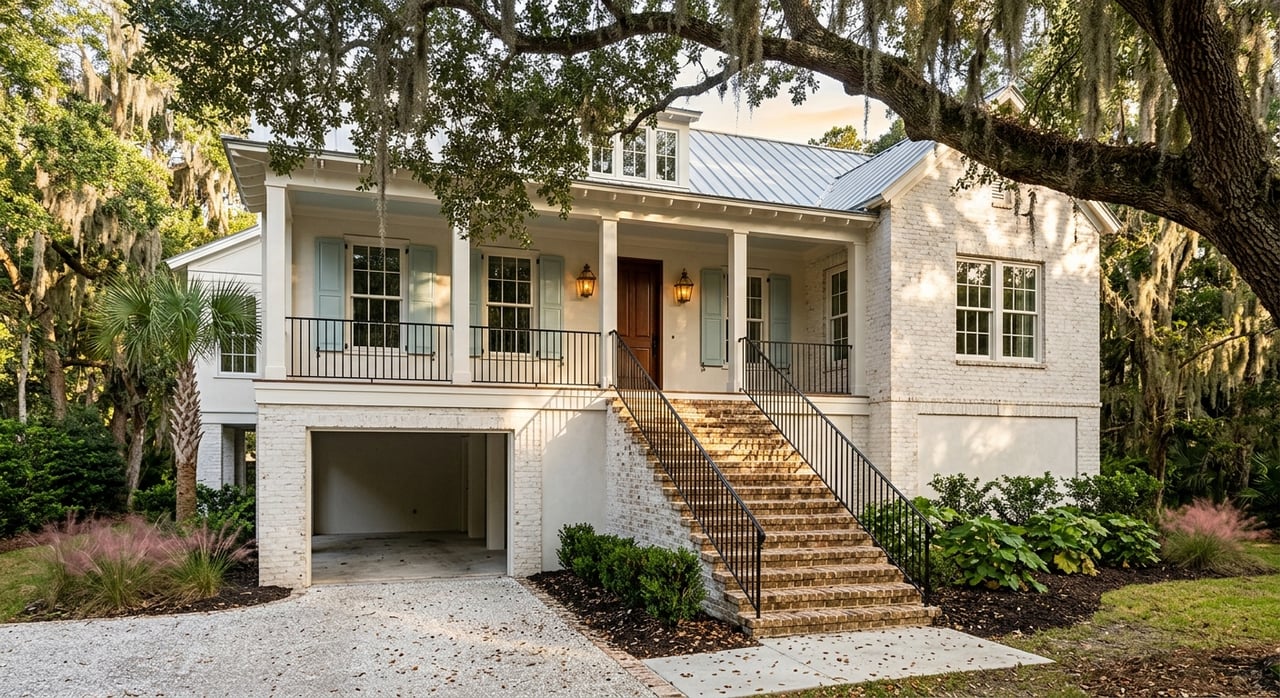
This is not just about insurance. Charleston County states that new and substantially improved residential structures in A, AE, AH, AO, and A99 flood zones must have the finished floor at least two feet above base flood elevation, and a flood elevation certificate is generally required before most building inspections through the county’s floodplain guidance.
The county also notes that standard homeowner insurance does not cover flood damage, so a separate flood policy is required, usually with a waiting period. If you are comparing lots, flood requirements can affect design, elevation work, insurance planning, and overall budget.
Stormwater is another major factor on Johns Island. Charleston County classifies unincorporated Johns Island as a Stormwater Special Protection Area, and the county requires a stormwater permit for land-disturbance activity over 5,000 square feet. If you are clearing land, rebuilding, or developing a larger homesite, that can affect both timing and cost.
Not every limit on a property appears in the listing remarks. Some of the most important details live in recorded documents such as plats, easements, liens, restrictions, and conservation covenants.
Charleston County’s Register of Deeds records those property-related documents. For a land purchase, reviewing them can help you understand where utilities may run, whether setbacks or access easements affect the site, and whether future subdivision or certain improvements may be limited.
Once you move from land search to construction planning, builder due diligence becomes just as important as lot due diligence. South Carolina requires a current license or registration for residential building and related trades, and Charleston County states that only licensed contractors may work on a property unless the homeowner or immediate family is doing the work under county homeowner rules.
You can verify credentials through South Carolina’s residential licensure resources. Before signing a build contract, it is wise to confirm who is responsible for permits, which contractors are involved, and how the permit chain will be handled.
You should also read the warranty language carefully. South Carolina’s Residential Construction Standards are performance standards used in workmanship evaluations, but they are not a warranty themselves.
Those standards say homeowners should identify performance-standard violations within 12 months after substantial completion, and they allow inspection of major structural damage during the first 8 years after substantial completion. They also treat a certificate of occupancy or final inspection as evidence of substantial completion, which makes timing important.
If a defect dispute comes up later, South Carolina’s Notice and Opportunity to Cure Construction Dwelling Defects Act requires written notice at least 90 days before filing suit. That is one reason your builder’s contract, written warranty, and cure process deserve close attention before construction begins.
Construction financing works differently from a standard mortgage. The CFPB explains that construction loans are typically funded in draws as work progresses, may carry higher rates than long-term mortgages, and sometimes convert to permanent financing while others require a new application.
The CFPB also notes that most closed-end consumer construction loans secured by real property are covered by Loan Estimate and Closing Disclosure rules, and lenders generally must provide a Loan Estimate within 3 business days after receiving a mortgage application. That makes early lender conversations important, especially if your project includes land purchase timing, builder deposits, and multiple approval steps.
On Johns Island, the build timeline is often controlled by the slowest approval in the process. Septic approval may need to happen before the county building permit if sewer is unavailable. Stormwater permitting may apply before land disturbance. Flood-zone properties may require elevation documentation before inspections. In planned developments, infrastructure and lot release schedules can also unfold over years.
If you want a cleaner path to building on Johns Island, start with a focused due diligence checklist:
The more clearly you answer those questions before closing, the more confident you can be about budget, design, and timing.
Johns Island offers a wide range of opportunities, from planned new-construction communities to private acreage and custom homesites. But that variety is exactly why the process benefits from careful, local guidance.
When you understand zoning, utilities, soils, floodplain rules, recorded restrictions, builder licensing, and financing at the front end, you can move forward with fewer surprises and stronger negotiating power. If you are exploring land or new construction on Johns Island, Marie Pohlman can help you evaluate your options with a clear, step-by-step approach rooted in Lowcountry market knowledge.


If you're wanting a Real Estate Agent with exceptional communication, unwavering patience, extensive knowledge of the Lowcountry's market, and one that produces results, please don't hesitate to reach out!