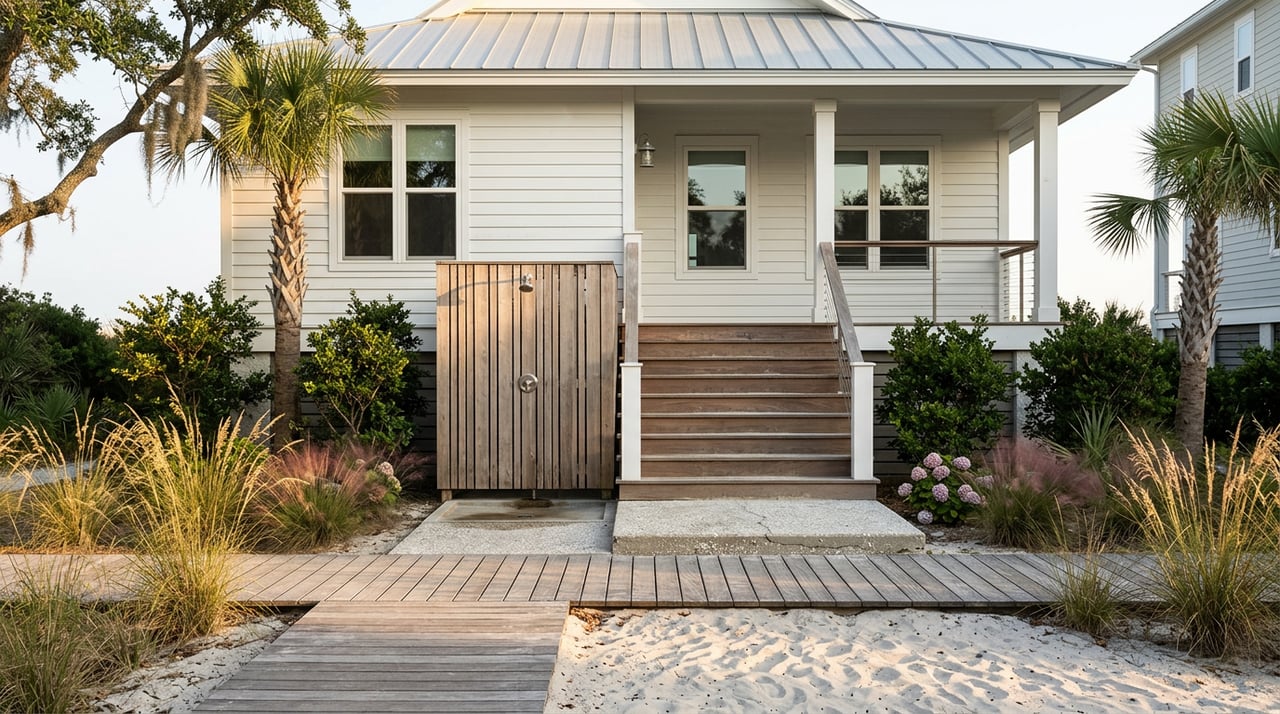
Choosing Between Isle of Palms and Sullivan’s Island
March 5, 2026
March 5, 2026
Torn between Isle of Palms and Sullivan’s Island for your beach home? You are not alone. Both offer gorgeous shoreline and quick access to Charleston, but they feel different, follow different rental rules, and live at different price points. In this guide, you’ll get a clear, side‑by‑side look at lifestyle, beach access, dining, rental policies and taxes, housing stock, flood and insurance essentials, and a simple decision checklist. Let’s dive in.
On IOP you’ll feel a resort‑forward, family‑vacation energy, especially spring through fall. The Wild Dunes Resort anchors the island’s north end with golf, spa, pools, and multiple dining venues that attract both guests and owners. Expect busier summer weekends, more services for visitors, and convenient on‑island recreation. For a taste of what’s nearby, browse Wild Dunes dining.
Sullivan’s Island is smaller and mostly single‑family residential. The commercial area is compact along Middle Street, with well‑regarded local restaurants and small shops. Historic sites like Fort Moultrie and the lighthouse add character, while limited space for commercial development helps keep the feel calm and community‑oriented.
IOP is built to welcome day visitors. You’ll find multiple public beach accesses, a staffed county park, and seasonal paid parking that helps manage peak demand. For current locations and rates, check Isle of Palms parking.
Sullivan’s Island has fewer public beach facilities and no large resort lots. The town’s scale and parking limits translate to fewer day‑visitors and a quieter shoreline. Many buyers choose SI for that calmer experience.
On Isle of Palms, you have resort and beach‑town options, with more choices clustered inside Wild Dunes and near Front Beach. On Sullivan’s Island, dining is curated and compact on Middle Street. Favorites like The Obstinate Daughter and Poe’s Tavern draw steady local attention, and you can reach Mount Pleasant or downtown Charleston in short order for more variety.
IOP requires a short‑term rental business license if you rent for any length of time. The city posts a written maximum‑occupancy notice, typically following a two‑per‑bedroom‑plus‑two formula, and it enforces vehicle and parking limits. Owners must provide a 24/7 local contact able to be on site within one hour. Licenses can be revoked for repeated verified complaints, and fees are tiered based on gross rental income. Review the city’s requirements on the IOP short‑term rental page.
Sullivan’s Island treats rentals of fewer than 28 consecutive nights as illegal under its licensing framework. If you plan to lease, you are applying for and documenting a long‑term residential rental of 28 nights or more. That rule, along with active enforcement, effectively removes nightly rentals from the island’s housing stock. See the town’s long‑term rental agreement and the Business License page for filing details.
On IOP, rental operators collect and remit a set of state and local taxes for short stays, including sales and accommodations taxes. The city lists the items and percentages on its short‑term rental page. Tax rates can change, so confirm with Charleston County and the South Carolina Department of Revenue before taking bookings. For Sullivan’s Island, taxation depends on the legal long‑term rental structure since the town does not permit conventional nightly STRs.
IOP offers a broad mix. You’ll find oceanfront and second‑row single‑family homes in the upper price tiers, plus many resort condominiums in and around Wild Dunes that provide lower entry points relative to luxury oceanfront homes. Renovated cottages and custom builds fill in the middle. Product variety on IOP helps you match lifestyle, budget, and rental goals.
Sullivan’s Island is largely single‑family, with many historic and architecturally sensitive properties. Inventory is limited and pricing is generally in the multi‑million range, especially near the beach or waterfront. Entry points are higher than IOP, which aligns with SI’s quieter residential character and stricter approach to transient rentals.
If you prefer a condo, lock‑and‑leave living, or more flexible rental windows, IOP usually offers more options. If you want a high‑end, low‑density residential setting and do not need nightly rental income, SI may be the better fit. In both markets, verify current pricing with a fresh MLS snapshot before you write an offer.
Isle of Palms has an active nightly rental market with clear licensing. Summer typically brings higher rates and stronger occupancy, while shoulder seasons vary by location and product type. Use third‑party analytics and conservative assumptions to model returns. Marketwide tools like AirROI’s IOP overview can frame expectations, but you should run a property‑specific report before contracting.
Because licensed rentals on SI require 28 nights or more, any income model should be built around monthly or longer stays. Gross revenue per available night can be lower than a high‑ADR nightly rental, but turnover, cleaning, and management complexity are also lower. If your strategy depends on nightly STR income, SI is generally not suitable.
Both islands are barrier islands with significant flood exposure. Elevation requirements, FEMA flood zones, and local ordinances affect rebuild costs, financing, and insurance. On IOP, review the city’s flood resources and elevation standards on the Flood Damage Prevention page.
Before closing on any property, request the elevation certificate, ask which FEMA flood zone it sits in, and obtain quotes for an NFIP policy and any needed private excess coverage. On Sullivan’s Island, the town shares guidance and resources on Floodplain Management. These details can meaningfully change your total cost of ownership.
Ready to explore listings and run clear, property‑specific scenarios? Get a calm, data‑driven plan tailored to your goals with Marie Pohlman. Schedule a Free Lowcountry Market Consultation.

If you're wanting a Real Estate Agent with exceptional communication, unwavering patience, extensive knowledge of the Lowcountry's market, and one that produces results, please don't hesitate to reach out!