Isle of Palms Beach Renourishment 2026: What August Shows
August 13, 2026
August 13, 2026
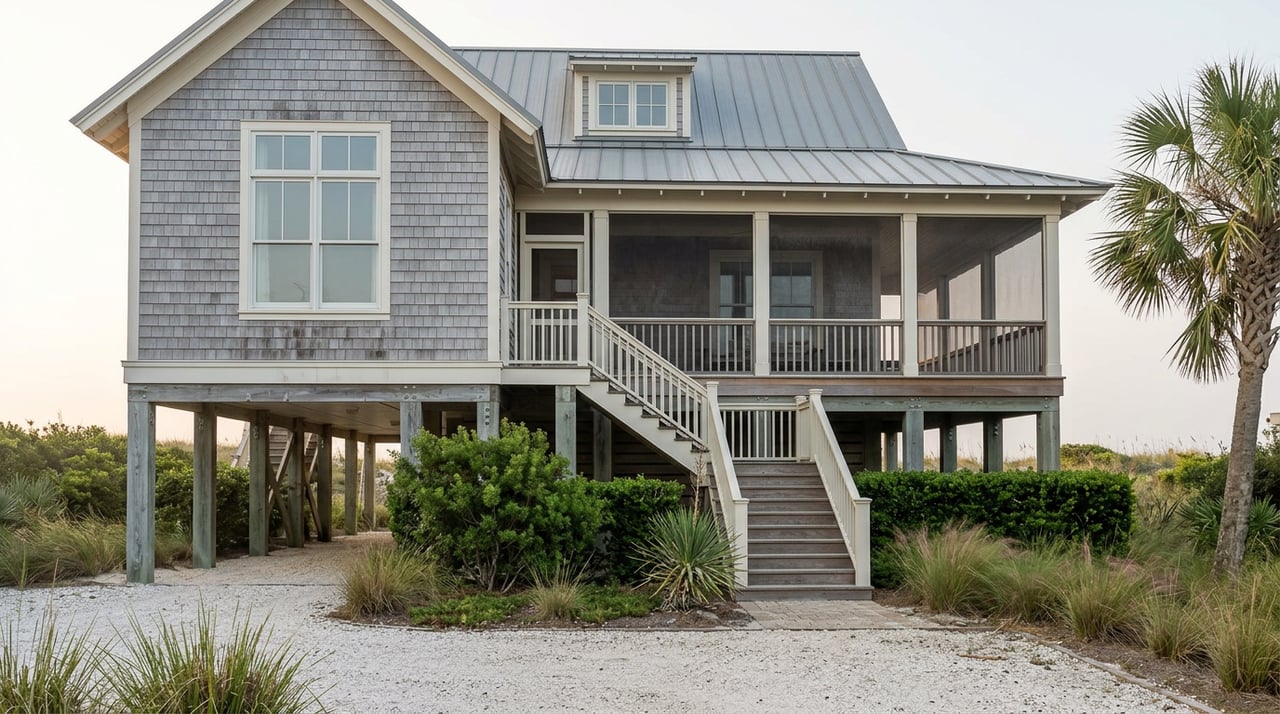
Stand on the beach behind the Wild Dunes Property Owners Beach House this week and you will see two things that do not usually share space: a floating pipeline pumping sand ashore around the clock, and a roped-off patch of dune where a loggerhead laid her eggs a few weeks earlier. Neither one is going anywhere until the other is done.
That overlap is not an accident of timing. It is the actual story of Isle of Palms in August 2026, and it is more interesting than the standard "big project underway" post you have probably already seen. The island is in the middle of its largest beach renourishment ever attempted, a $21.47 million job awarded to Marinex Construction of North Charleston, and it happens to be unfolding during one of the strongest loggerhead nesting seasons the state has recorded in years. The two crews working the north end right now, one moving sand and one monitoring turtle nests, are working the same few hundred yards of shoreline on the same calendar.
The renourishment is being built in three phases, moving south to north to south again depending on which stretch needs the most sand. According to the city's project updates, the schedule breaks down like this:
| Phase | Window | Location |
|---|---|---|
| Reach 1 | Early July through mid-August | Mariner's Walk north to Ocean Point Drive |
| Reach 2 | August through early September | Wild Dunes Property Owners Beach House south to 56th Avenue |
| Reach 3 | Mid-September through November | South end, wrapping at Front Beach and Breach Inlet |
That puts early August right at the overlap between the two phases. Reach 1 is still finishing up its run toward Ocean Point Drive, and sand pumping at the Wild Dunes end of Reach 2 was already underway by late July, according to local reporting. In total the project is placing up to 2.5 million cubic yards of sand along nearly 19,200 linear feet of beach, with roughly 1.7 million cubic yards going to the Wild Dunes side and the remaining 800,000 headed to the island's south end later this fall.
The pace is steady rather than fast. Crews are advancing at 100 to 300 feet of shoreline per day, which is why residents near the current work zone are hearing the same dozer-and-backup-beeper soundtrack for weeks at a stretch rather than a quick in-and-out job. The city has said there are no significant beach closures planned and that walkovers will be installed so people can still cross the pipes to reach the water. What you cannot avoid, if you live within earshot of Reach 2 right now, is the noise.
Here is the part that most coverage of this project has skipped past. South Carolina is having a genuinely unusual loggerhead season in 2026. Statewide nest counts hit 3,916 for all of 2025, a slow year, and by mid-July of this year the state had already logged 6,797 nests with the season still open, according to reporting from Lucky Dog Publishing. Isle of Palms itself had recorded 33 nests and 39 false crawls by that point, already ahead of last year's full season total of 28.
The detail that makes this more than a nice coincidence is where those nests are landing. Of all nests and false crawls documented on the island so far this year, 73 percent of nests and 85 percent of false crawls have been on the north and south ends, the same two stretches currently under construction or slated for it later this fall. Severe erosion had already narrowed the usable nesting habitat elsewhere on the island, and turtles have reportedly been seen circling at dawn, searching for a dry patch of sand or an elevated dune that has not washed out. The ends of the island, machinery and all, are still the best real estate available to a nesting loggerhead this year.
The city and its coastal engineers built the schedule around this reality rather than in spite of it. Nighttime monitoring runs through every active construction area, and if a turtle attempts to nest nearby, crews establish a buffer zone until she finishes and returns to the water undisturbed. Coastal scientist Steven Traynum, whose firm Coastal Science and Engineering is leading the technical side of the project, put the larger goal simply in remarks reported by The Post and Courier:
"A lot of the beaches around here are eroding. They're losing sand year after year. This is a process to put that sand back so that you maintain or grow your shoreline."
Marinex Vice President Thomas Payne has noted that this is the company's first project on Isle of Palms specifically, even though the firm has handled renourishment work from Pawleys Island to South Amelia Island, Florida. City officials have described it as the island's biggest beach renourishment project to date, ahead of prior efforts in 2018 and 2008.
If you want to follow the season yourself, the basics matter more this year than most:
South Carolina's official nesting season runs from May 1 through October 31, so it overlaps with the entire back half of this renourishment project.
The practical question for anyone who lives here, rather than visits for a week, is where to walk, park, and gather while the north end works through its noisiest stretch. The city's own parking rules give a clue. Full-time residents can register up to four vehicles for a free parking permit through ParkIOP, which allows unlimited parking in the municipal Lots A and B near Front Beach at no charge. That permit does not cover the metered spaces along Ocean Boulevard, and it is worth remembering given that peak-season lot rates on weekends and holidays now run as high as $25, a jump that followed the city's first parking fee increase in five years.
The free right-of-way parking along Palm Boulevard between roughly 42nd and 57th Avenue sits close to the current Reach 2 work zone, so it is a noisier walk to the water than usual through early September. Front Beach and the metered stretch of Ocean Boulevard between 10th and 14th Avenue sit well outside the work zone entirely, which is where a fair number of regulars have simply shifted their evening routine for the next several weeks.
That shift matters because the commercial heart of the island has not slowed down at all. The Windjammer still runs live music on Front Beach most nights of the week. Coconut Joe's Beach Grill, open since 1997, still fills its rooftop deck at sunset. Islander 71 sits on the Intracoastal side of the island, well clear of the ocean-facing work zone, and keeps its raw bar and dockside tables busy through the evening. For a quieter start to the day, Sea Biscuit Cafe is still turning out the same homestyle breakfast plates it always has, and Papi's Taqueria remains the go-to for an after-beach taco with a rooftop view.
None of that is affected by what is happening a mile or two north. If anything, the current work zone has made Front Beach feel like the calmer half of the island for the moment, which is a small silver lining for anyone who lives closer to the pier than to Wild Dunes.
Reach 2 wraps in early September, at which point crews shift south for Reach 3, the final phase, running from mid-September through November and finishing at Front Beach and Breach Inlet. City leaders have said the goal is for the whole project to be complete by December, which would let the island start 2027 with a rebuilt shoreline expected to hold for roughly eight to ten years before another renourishment is needed. Mayor Phillip Pounds has been blunt about why the city is willing to spend $21 million and endure months of noise to get there, calling the beach the town's "economic engine" in remarks reported by DredgeWire earlier this year.
For residents, the practical takeaway for the next several weeks is simple. The loudest, most disrupted stretch of beach right now is the Wild Dunes side, the same stretch where the island's turtles have decided to do most of their nesting this year. Front Beach is quieter than usual. And by the time cooler weather arrives, the work will have moved south, following the same schedule the turtles are already living by.
If you are watching how a specific pocket of the Isle of Palms shoreline is changing this year, whether that means the sand in front of a place you already own or a stretch you are keeping an eye on for the future, Marie Pohlman tracks these kinds of on-the-ground shifts across the coastal islands as part of her regular work in the Lowcountry. Reach out anytime you want a local read on what a project like this means for a specific address, not just the island in general.
This article is general information, not legal, tax or financial advice. Consult a qualified professional about your situation.

If you're wanting a Real Estate Agent with exceptional communication, unwavering patience, extensive knowledge of the Lowcountry's market, and one that produces results, please don't hesitate to reach out!