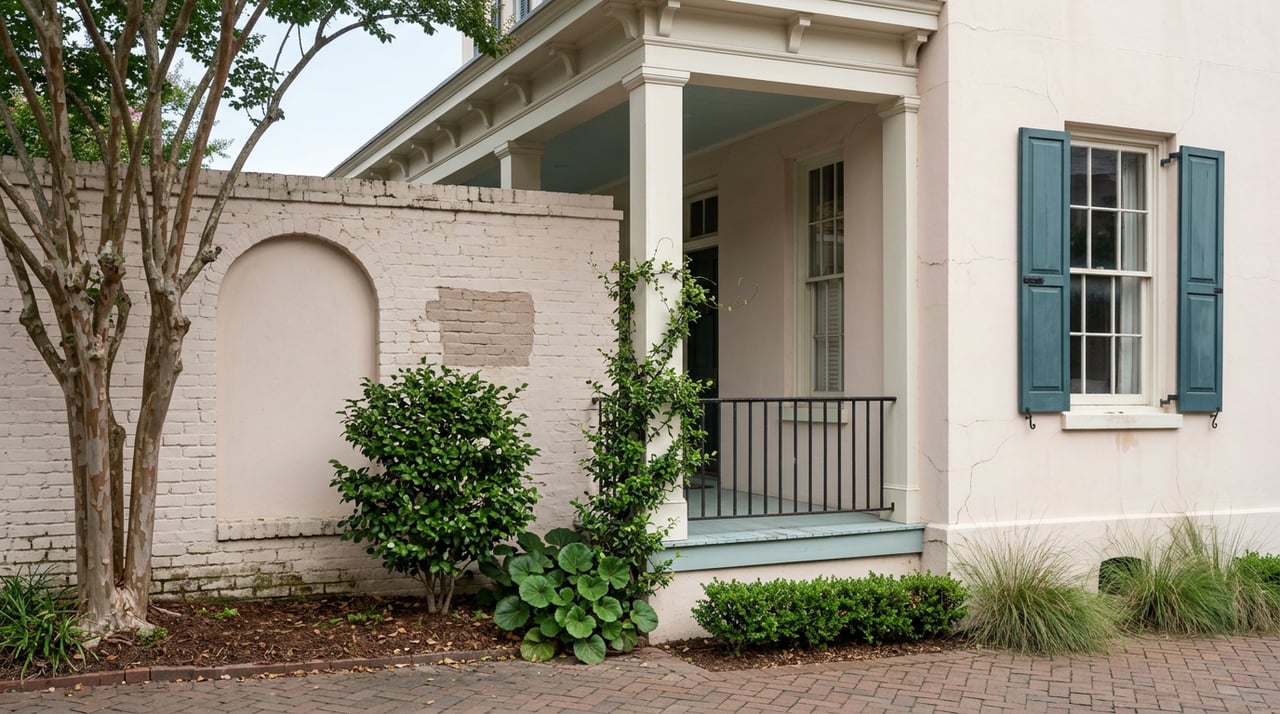
Downtown Charleston's Late-Summer Pulse on Cannon Street
August 20, 2026
August 20, 2026
This year, three storefronts in and around the Cannon Street corridor have opened or are slated to open, though not all are on Cannon Street. None of them are on King Street. That is the part worth sitting with if you already live below Calhoun and think you know where downtown's energy lives right now.
For years the answer to "what's new downtown" has meant King Street: a new tenant in an old storefront, a monthly street closure, the same half-mile everyone already watches. That is still true in one narrow sense. But the actual growth this year, the kind where a business adds a location instead of just replacing one, has been happening one block west, on Cannon Street between the medical district and King.
Babas already had two cafes downtown, one on Cannon Street and one on Meeting Street. In January this year they opened a third, at 115½ Wentworth Street, inside a two-story brick building from 1931 with its own private patio. That adds a third Babas location downtown, on Wentworth Street near its existing Cannon Street cafe.
A few blocks from that original Cannon Street cafe, Sonder Wine Bar and Retail Shop opened this year at 90 Cannon Street, pouring by the glass in the afternoons and evenings, Wednesday through Monday. And directly across from Sonder, at 89 Cannon Street, on the ground floor of a building called The Charlee on Cannon, Alteño is slated to open this summer. It is the second location for the concept from Fonda Fina Hospitality founders Johnny and Kasie Curiel.
Three concepts, two of them new locations for operators who already had a foothold, all located on or near Cannon Street.
On Upper King this year, Mother's Ruin took over the space long occupied by The Rarebit, which closed last December after years as a King Street fixture. It is a new opening in a former restaurant space, and Mother's Ruin is worth a visit.
This is the distinction that gets lost when every roundup treats "new business" as one category. This year, two additional locations for established operators opened or were slated near Cannon Street, while Mother's Ruin took over The Rarebit's former space on Upper King.
If your own routine runs through downtown on foot, this matters in a small but real way. The wine bar you didn't have to walk to Market Street for is now ninety seconds off your own block. The cafe you used to think of as "the one on Cannon" now has a sibling on Wentworth with its own patio. None of that shows up in a King Street roundup, because King Street isn't where it happened.
The other piece of this year that a lot of downtown residents have registered without quite clocking its scale is what is currently on the walls at the Gibbes Museum of Art. Fourteen bronze sculptures by Auguste Rodin arrived in late February, on loan through a partnership with the Iris and B. Gerald Cantor Foundation, and they are staying through January 17, 2027. That is not a weekend show or a single fundraiser night. It is close to a full year of a museum most people walk past on Meeting Street suddenly holding work by Rodin; the Charleston City Paper reported that the museum's director called him "probably without argument, the most famous sculptor of the 19th century."
The show is included in regular admission, ten to fourteen dollars for adults, which means it does not require planning a special outing the way a ticketed touring exhibit would. It is simply there, week after week, which changes the calculation for anyone who lives close enough to duck in on a Wednesday evening, when the museum stays open until eight with free admission that evening specifically.
None of this displaces the parts of downtown's calendar that were already fixed. The Charleston Farmers Market still runs every Saturday morning through the end of November in Marion Square, a tradition that started in 1989 and has been drawing vendors and neighbors back to that same six and a half acres for almost four decades.
Second Sunday on King Street still closes that stretch from Queen to Calhoun from noon to five, and this month's edition on August 9 landed on the final day of South Carolina's sales tax holiday, with a National Night Out tie-in bringing the police department's community outreach into the middle of the afternoon at the Bus Shed on Meeting Street. That is the kind of overlap that only happens because the second Sunday of the month and the first weekend of August's tax holiday collided this particular year, and it is exactly the sort of detail a monthly recurring event calendar won't flag for you on its own.
So the fixed points of a downtown week are still fixed. What changed is what fills the gaps between them. A year ago, filling a downtown week meant picking from the same rotation. Now it might mean:
Downtown Charleston extends beyond King Street, and this year's openings offer a look at activity on Cannon Street and nearby blocks. Two additional locations opened or were slated to open near Cannon Street, while Mother's Ruin took over The Rarebit's former Upper King space. If you live here, the practical version of that story is simple: the walk that used to end at King Street now has a reason to stop a block earlier.
That kind of shift, small enough that a roundup built from a press release would never catch it, is the actual texture of living somewhere instead of just visiting it. It is also the kind of pattern that tends to matter later, when a block's daily foot traffic and its restaurant density start showing up in how people talk about a street, long before it shows up in a listing description.
If you have been paying attention to which blocks below Calhoun are actually gaining ground this year, you already have better instincts about this market than most spreadsheets do. When you are ready to put those instincts to work, whether that means understanding what a specific block does to a home's value or simply talking through what you have been noticing, Marie Pohlman is happy to have that conversation. Schedule a Free Lowcountry Market Consultation whenever the timing is right for you.

If you're wanting a Real Estate Agent with exceptional communication, unwavering patience, extensive knowledge of the Lowcountry's market, and one that produces results, please don't hesitate to reach out!